Understanding HDI PCBs
High-Density Interconnect (HDI) PCBs represent a significant advancement in printed circuit board design and manufacturing. As technology evolves and electronic devices become smaller and more complex, the demand for HDI PCBs has surged. These specialized boards allow for more compact circuitry and enhanced performance, making them ideal for various modern applications. In this article, we delve into what HDI technology entails, its advantages, and why selecting a reliable HDI PCB manufacturer is crucial for businesses looking to stay competitive.
What is HDI Technology?
HDI technology refers to the use of microvias, blind vias, and buried vias in printed circuit board design, allowing for higher connectivity and denser routing. Unlike traditional PCBs, HDI boards can accommodate more layers within a smaller space. This advancement is primarily driven by the need for compact electronics in industries such as telecommunications, consumer electronics, and automotive technology.
Key Advantages of HDI PCBs
- Enhanced Performance: Due to reduced distances between elements, HDI PCBs provide better signal integrity and lower latency.
- Compact Size: The ability to utilize smaller components enables the creation of slimmer, lightweight devices.
- Lower Production Costs: Although the upfront costs can be higher, the efficiency gained often results in lower overall production costs when factoring in reduced material waste and lower assembly costs.
- Improved Thermal Performance: The design allows for better heat dissipation, which is vital in high-performance applications.
Applications in Modern Electronics
The applications of HDI PCBs are far-reaching. They are widely utilized in smartphones, tablets, advanced medical devices, and high-end computing equipment. Furthermore, sectors such as aerospace and automotive are increasingly adopting HDI technology to meet stringent performance and reliability standards.
Evaluating HDI PCB Manufacturers
Choosing the right HDI PCB manufacturer is essential for ensuring quality and reliability in your electronic products. With many options available, it is crucial to establish specific criteria that align with your project's needs.
Criteria for Choosing the Right Manufacturer
- Experience and Expertise: Look for a manufacturer with a proven track record in producing HDI PCBs.
- Technology and Capabilities: Ensure that the manufacturer is equipped with the latest technology and can handle the specific requirements of your project.
- Quality Assurance: Opt for manufacturers that adhere to international quality standards such as ISO and IPC guidelines.
- Customer Service: A responsive and knowledgeable customer service team can make a significant difference throughout the production process.
Importance of Certifications and Standards
Certifications such as ISO 9001 and IPC-A-600 are critical indicators of a manufacturer’s commitment to quality. These standards ensure that the HDI PCBs produced meet the reliable performance levels required in demanding applications.
Comparing Cost vs. Quality
While it may be tempting to choose the least expensive option, it is vital to balance cost with quality. A lower price may lead to inferior materials or manufacturing processes, resulting in higher long-term costs due to failures or recalls. It is essential to evaluate the overall value rather than just the price tag.
HDI Manufacturing Process
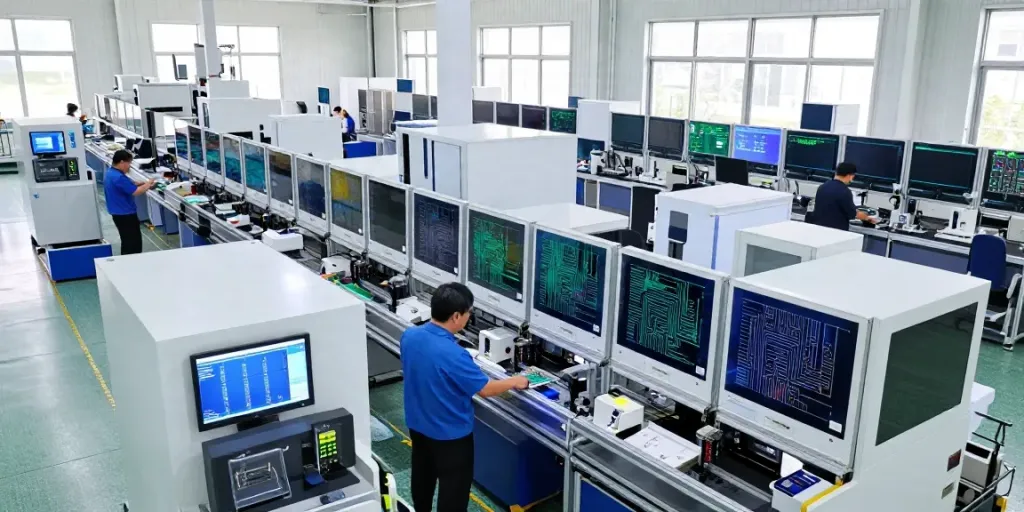
The manufacturing process for HDI PCBs is intricate and requires precision at every step. Understanding these processes can help in evaluating potential manufacturers.
Overview of HDI PCB Fabrication Techniques
HDI boards are typically manufactured using a combination of techniques, including:
- Microvia Technology: Involves creating very small vias that connect different layers of the PCB.
- Sequential Lamination: A method that allows for stacking multiple layers of circuitry to increase density.
- Direct Imaging: This technique uses lasers to create precision patterns on the board, improving accuracy and reducing defects.
Challenges in HDI Production
Manufacturers often face challenges in producing HDI PCBs, such as:
- Handling Smaller Components: The miniaturization of components can complicate assembly and quality control.
- Thermal Management: Ensuring that the boards can efficiently dissipate heat without compromising performance is critical.
- Cost of Technology: Investing in state-of-the-art machinery and skilled personnel can be a significant expense for manufacturers.
Innovations in HDI Technology for 2026
The future of HDI technology is bright, with innovations on the horizon, including advancements in material science for better thermal performance and the integration of flexible circuitry into HDI PCB designs. These innovations will further enhance the capabilities and application ranges of HDI PCBs across industries.
Case Studies: Successful HDI Implementations
Examining real-world applications provides valuable insights into the effectiveness of HDI PCBs.
Real-World Applications across Industries
One notable implementation of HDI technology can be found in the medical device sector, where improved signal integrity can save lives. In consumer electronics, companies are using HDI PCBs to produce slimmer, more powerful devices, meeting consumer demand for more advanced technology.
Lessons Learned from Industry Leaders
Industry leaders stress the importance of collaboration between design and manufacturing teams to ensure that HDI PCB designs are optimized for manufacturability. This proactive approach minimizes errors and enhances product performance.
Impact on Performance Metrics
Companies that have adopted HDI technology often report significant improvements in key performance metrics, including reduced failure rates and enhanced signal integrity. This leads to a better overall user experience and increased customer satisfaction.
The Future of HDI PCBs
The market for HDI PCBs is poised for continued growth, driven by technological advancements and evolving consumer demands.
Emerging Trends in PCB Technology
Trends such as increased integration of IoT devices and the push for greener manufacturing processes are expected to influence the HDI PCB landscape significantly. Emerging technologies, including artificial intelligence and machine learning, may also play a role in optimizing production processes and quality assurance.
Predictions for the HDI Market by 2026
Experts predict that by 2026, the HDI PCB market will expand substantially, with new applications emerging across various sectors, including automotive, communications, and consumer goods. The focus will shift toward not just producing high-density boards but also enhancing their sustainability and environmental impact.
Strategies for Staying Competitive
To remain competitive in the fast-paced electronics market, businesses should invest in research and development of HDI technologies. Collaborating with research institutions and engaging in continual learning will equip manufacturers to innovate and meet future demands effectively.
What is HDI in PCB manufacturing?
HDI in PCB manufacturing refers to the use of advanced techniques to create high-density interconnects, facilitating the production of compact and efficient electronic circuits.
Who is the world's biggest PCB manufacturer?
As of now, companies like Foxconn and Zhen Ding Technology are among the largest PCB manufacturers globally, thanks to their extensive capabilities and vast production capacity.
Is JLCPCB a Chinese company?
Yes, JLCPCB is a Chinese company renowned for its PCB manufacturing services, particularly for offering a range of options for HDI pcbs.
Who are the top 10 PCB manufacturers?
The leading PCB manufacturers include companies such as Foxconn, Jabil, and Zhen Ding Technology, recognized for their innovations and extensive operations in the global market.
What are the benefits of HDI PCBs?
The benefits of HDI PCBs include higher density, improved signal speed, enhanced performance, and increased reliability, making them essential for modern electronics.